- Mateeka House, 57B Katalima Road Naguru
- +256 200 923 345
- admin@useaug.org

Solar Sector Innovators Honoured at 2026 USEA Awards

PURE Market Status Report Supply Side Uganda August 2026
October 5, 2026
Experts Urge Uganda’s Solar Sector to Move Beyond Lighting to Power Productivity
October 5, 2026
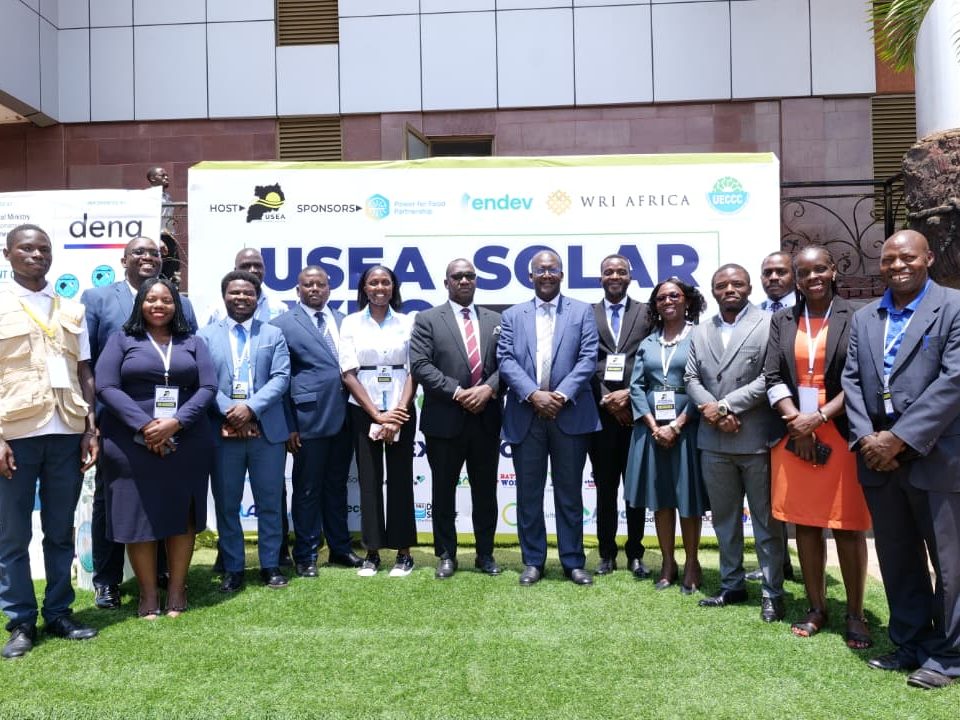
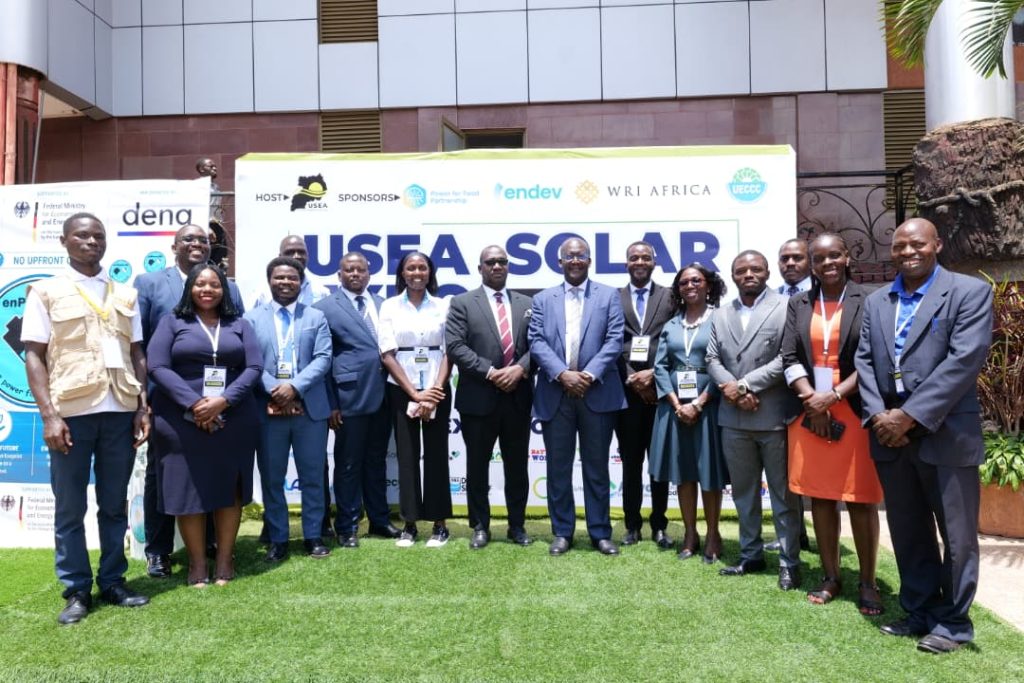
Key players in Uganda’s solar and renewable energy sector have been recognised for their contribution to innovation, productive energy use and the advancement of clean energy at the 2026 Uganda Solar Energy Association (USEA) Awards.
The awards were held on Friday at Silver Springs Hotel in Bugolobi, Kampala, marking the cAerolove Initiative Uganda emerged as the biggest innovation winner, taking the Best Solar Innovation 2026 award for its solar-powered agricultural hubs that use drone technology to monitor crops.
The initiative brings together solar energy, agriculture and aviation technology to improve agricultural productivity and promote innovative uses of renewable energy. onclusion of the three-day USEA National Expo and Conference 2026.
Engineer Grace Onziru was recognised as Best Woman in the Energy Sector, while SNV won the Best Productive Energy Use award.
The awards recognised individuals, organisations and initiatives that are contributing to the growth and practical application of solar energy in Uganda.
The recognition comes as the solar industry increasingly turns to productive uses of renewable energy, particularly in agriculture, where unreliable electricity and post-harvest losses remain challenges.
USEA General Secretary Emily Wasirwa urged Ugandans to take advantage of the country’s abundant sunshine to develop solutions that address economic and social challenges.
She pointed to solar-powered cold storage as an area with significant potential to reduce post-harvest losses and strengthen food supply chains.
“Solar freezers and cold storage not only reduce post-harvest losses, but they also promote continuity in supply,” Wasirwa said.
She said Uganda needs to develop durable solar-powered cold storage solutions, particularly for agricultural communities, by 2030.
Wasirwa also noted that solar technology could provide reliable electricity to households, businesses and industries, especially in areas with limited access to grid power.
The awards were held amid ongoing efforts to strengthen regulation and standards in Uganda’s solar industry.
Elizabeth Kaijuka, Assistant Commissioner in the Ministry of Energy and Mineral Development, who represented Energy Resources Commissioner Dr Brian Isabirye, said government was working with the Uganda National Bureau of Standards (UNBS) to establish standards for solar products imported into the country.
She said consultations with industry stakeholders were also being held to ensure that regulation supports the sector without unnecessarily constraining its growth.
“We are still engaging other key stakeholders to ensure that we do not over-regulate the sector,” Kaijuka said.
She noted that Uganda’s Energy Policy, first adopted in 2007 and revised in 2023, provides for renewable energy technologies as part of the country’s transition to cleaner energy.
“Policy-wise, I think we are on track. But on regulatory reform, I think we still have a long way to go,” she said.
Kaijuka called for greater coordination among government institutions involved in the sector, including the Ministries of Finance, Planning and Economic Development; Agriculture; Energy and Mineral Development; and Water and Environment.
She also identified the Uganda Revenue Authority and UNBS as key stakeholders in addressing challenges affecting solar businesses.
Wangari Muchiri of the Global Solar Council called on Uganda and other African countries to create a more conducive environment for local manufacturing of solar equipment.
She said increased investment in manufacturing could create jobs while making solar products more affordable and accessible to consumers.
Muchiri also called for standardised data on solar energy uptake to provide reliable information for investment decisions and policy formulation.
She further urged solar companies to strengthen partnerships with universities and technical institutions to develop the skilled workforce needed to support the sector.
The 2026 USEA National Expo and Conference was held under the theme “Powering Productivity Within Solar Energy.”